Leave Your Message

Top Types of Freight Transport for Global Buyers

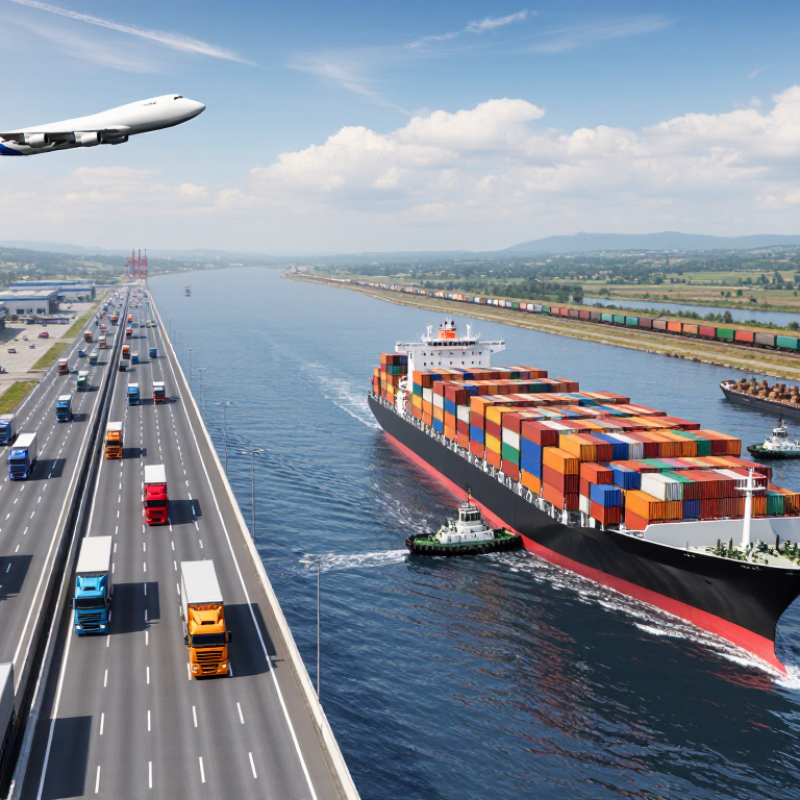
Global buyers rarely choose freight based on price alone. Delivery reliability, cargo sensitivity, route visibility, and final-mile access can change the real cost. Freight Transport decisions shape inventory levels, customer satisfaction, and cash flow.

The UNCTAD Review of Maritime Transport reports that shipping carries over 80% of global merchandise trade by volume. Sea freight therefore remains the foundation for heavy commodities, machinery, furniture, and containerized goods. It is slower, but usually more economical for large consignments. Air cargo tells a different story. IATA reports that air freight represents more than 35% of global trade value, despite carrying less than 1% by volume. Speed has a price. High-value electronics, medical equipment, and urgent replacement parts often justify it.

Road and rail transport add flexibility across regional supply chains. Rail can reduce emissions and provide stable inland capacity, while trucks offer direct delivery to factories, warehouses, and retail locations. Inland waterways may also work well for bulky cargo near navigable ports. The World Bank’s Logistics Performance Index 2023 shows that customs, infrastructure, shipment organization, tracking, and timeliness all influence logistics performance. A low freight rate cannot repair poor visibility or repeated border delays.

These figures simplify a complicated reality. Weather, port congestion, fuel costs, packaging, and seasonal demand can quickly change the best option. A buyer comparing Freight Transport modes should test total landed cost, not only the quoted rate. In practice, multimodal shipping often provides the strongest balance, although it demands careful coordination and honest data. There is no universal winner. The right choice depends on the cargo, route, deadline, and tolerance for risk.
Top Types of Freight Transport for Global Buyers

How Freight Transport Supports Global Purchasing

Freight transport is the working link between global purchasing plans and physical delivery. A buyer may approve a supplier today, yet production depends on containers, trucks, railcars, or aircraft moving on schedule. Transport choices affect landed cost, inventory levels, and customer promises. They also influence how confidently a purchasing team can source from distant markets.

Ocean freight suits large, non-urgent shipments. A full container can carry machinery parts, furniture, or packaged materials at a controlled unit cost. Air freight offers speed for samples, replacement components, and time-sensitive stock, but its higher cost requires careful forecasting. Rail and road services can connect inland factories with ports and distribution centers. In practice, a combined route often works best. A truck may collect cartons, rail may cover the inland distance, and a vessel may handle the overseas journey.

Reliable purchasing requires more than comparing freight rates. Teams should check transit time, cargo protection, documentation, insurance, and delivery visibility. A simple shipment record can track booking dates, loading photos, seal numbers, and arrival estimates. Small details matter. One missing document can delay a complete order.

Real operations rarely follow the original plan perfectly. Weather, port congestion, and inaccurate volume estimates can create costly surprises. This is where experienced buyers build practical buffers and review transport data after each shipment. A cheaper route is not always efficient if it causes stockouts or repeated handling. Better decisions come from testing assumptions, measuring results, and correcting weak points before the next purchase cycle.
Top Types of Freight Transport for Global Buyers

How Freight Transport Supports Global Purchasing: average greenhouse-gas emissions by freight mode, measured in grams of CO₂e per tonne-kilometre.

Ocean shipping generally provides the lowest emissions intensity for large, long-distance shipments, while air freight offers the fastest delivery with a substantially higher environmental impact. Actual results vary by route, vehicle, fuel, load factor, and shipment size.

Source: Representative default emission factors based on the Smart Freight Centre GLEC Framework. Values are intended for purchasing and logistics comparisons, not route-specific carbon accounting.

Key Factors for Comparing International Freight Options

Top Types of Freight Transport for Global Buyers

Key Factors for Comparing International Freight Options

Comparing freight options starts with the cargo, route, and delivery promise. A pallet of machine parts needs different planning from fragile laboratory equipment. Air freight offers speed, but its weight-based pricing can rise sharply. Ocean freight usually reduces unit costs for larger shipments. Rail and road services can provide useful inland connections. The cheapest quote may not be cheapest.

Buyers should compare the complete door-to-door cost, not only the base rate. Request separate figures for pickup, terminal handling, customs processing, storage, fuel adjustments, and final delivery. Check estimated transit time against typical delays. A four-day estimate means little if port congestion regularly adds ten days. It helps to review tracking quality, cargo protection, claims procedures, and insurance terms. Small details matter.

A 480-kilogram shipment may favor ocean transport when delivery is flexible. The same cargo may justify air freight when a factory risks stopping. Seasonal weather, public holidays, and route capacity can change the calculation. Ask how often schedules are revised. Ask what happens after a missed connection. My own comparisons have sometimes overvalued a low rate and ignored storage exposure. That mistake is easy to make. A written comparison table can reveal the risk: total cost, transit range, service limits, and the person responsible for each handoff.

Ocean Freight for High-Volume and Cost-Sensitive Shipments

Top Types of Freight Transport for Global Buyers

Ocean freight remains a practical choice for global buyers moving large, heavy, or non-urgent shipments. It usually costs less per unit than air freight, especially when goods fill a full container. Full-container load shipping offers better control over handling and loading conditions. Less-than-container load shipping can help smaller buyers share space with other cargo. The trade-off is time. It moves slowly.

Reliable planning starts with accurate cargo details. Buyers should confirm weight, dimensions, packaging strength, destination port, and delivery terms before booking. A reinforced pallet may prevent damage during repeated handling. Moisture protection also matters inside long-haul containers. In my experience, small measurement errors can create unexpected charges or loading problems. Space matters.

Ocean schedules can change because of port congestion, weather, inspections, or equipment shortages. Building a reasonable buffer is safer than promising an exact arrival date. Buyers should also check documentation, import requirements, insurance options, and product restrictions with qualified logistics professionals. Clear commercial invoices and packing lists reduce avoidable delays. Do not ignore the last mile. A container reaching the port does not mean the shipment has reached the warehouse.

For cost-sensitive orders, compare the full landed cost rather than the ocean rate alone. Include origin handling, documentation, port fees, inland transport, duties, and storage risks. Consolidation may reduce freight spending, but it can add handling points and coordination work. The cheapest option is not always the most dependable. That judgment deserves careful review.

Top Types of Freight Transport for Global Buyers - Ocean Freight for High-Volume and Cost-Sensitive Shipments

Transport Type Typical Shipment Profile Typical Transit Time Relative Cost Approx. CO₂e Intensity Main Advantages Key Limitations Best Use Cases
Ocean Freight - FCL Full container loads, generally 15-28 metric tonnes depending on container type and route restrictions Approximately 20-45 days port-to-port; longer with inland delivery and customs clearance Lowest for large, non-urgent shipments Usually below 20 g CO₂e per tonne-kilometre Very low unit cost, high capacity, suitable for standardized cargo, predictable container planning Long transit time, port congestion risk, documentation requirements, container-level minimum charges Furniture, machinery, building materials, packaged goods, and seasonal inventory replenishment
Ocean Freight - LCL Shared container space for shipments typically below one full container load Approximately 25-50 days port-to-port because of consolidation and deconsolidation Low to moderate; economical for smaller, non-urgent cargo Generally below air freight per tonne-kilometre Avoids paying for an entire container, supports smaller purchase quantities More handling points, possible consolidation delays, higher cost per cubic metre than FCL Samples, small wholesale orders, spare parts, and mixed general cargo
Air Freight High-value, lightweight, time-critical shipments; commonly charged by actual or volumetric weight Approximately 1-7 days airport-to-airport, excluding customs and local delivery Highest among standard freight modes Often above 500 g CO₂e per tonne-kilometre Fast transit, frequent departures on major trade lanes, strong time-definite performance High transport cost, strict size and dangerous-goods rules, lower payload capacity Urgent components, medical supplies, electronics, samples, and high-value products
Rail Freight Containerized cargo on connected continental or cross-border rail networks Approximately 12-25 days terminal-to-terminal, depending on route and border procedures Moderate; normally faster than ocean and cheaper than air Often around 20-60 g CO₂e per tonne-kilometre, depending on traction and route Balanced speed and cost, lower emissions than air, suitable for inland distribution Limited network coverage, border and gauge changes, terminal-to-terminal dependence Containerized manufactured goods moving between connected inland markets
Road Freight Full truckloads, less-than-truckloads, pallets, and door-to-door regional deliveries Same day to approximately 10 days, depending on distance, borders, and service level Low to moderate for regional and inland moves Often around 60-150 g CO₂e per tonne-kilometre Door-to-door flexibility, broad geographic coverage, frequent pickup options Road congestion, driver and equipment availability, higher emissions over long distances Domestic distribution, port drayage, short cross-border routes, and final-mile delivery
Multimodal Transport A combined solution using two or more modes, such as ocean plus rail and road Approximately 25-60 days door-to-door, depending on the number of transfers Low to moderate when planned as an integrated route Varies by mode mix; usually lower than an air-only solution Combines ocean cost efficiency with inland reach and flexible delivery planning More coordination, transfer points, and potential schedule dependencies Global purchases requiring port-to-door delivery, inland fulfillment, or optimized cost and transit balance

Notes: Transit times are indicative port-to-port or terminal-to-terminal ranges and exclude exceptional disruptions. CO₂e figures are broad order-of-magnitude estimates based on commonly used freight-emissions ranges; actual results vary by vessel, fuel, load factor, route, distance, and reporting methodology. Freight rates also change with cargo dimensions, seasonality, fuel costs, port charges, customs requirements, and inland delivery distance.

Air Freight for Time-Critical and High-Value Goods

Air Freight for Time-Critical and High-Value Goods

Air freight suits global buyers who need fast, predictable delivery across long distances. It moves urgent components, medical equipment, samples, and premium electronics within tight schedules. A shipment can leave one continent in the morning and reach another within days.

Speed matters.

However, air freight costs more than ocean or road transport. Charges often depend on dimensional weight, not only the scale reading. A large, lightweight carton may cost more than a compact metal part. Buyers should compare transit time, handling fees, airport charges, and cargo insurance before booking. A rushed decision can create an expensive surprise.

Packaging needs practical attention. Use shock-resistant materials, sealed cartons, clear labels, and moisture protection where necessary. For temperature-sensitive goods, record the required range and confirm handling conditions at every transfer point. Reliable logistics partners should provide tracking updates, document checks, and delivery milestones. Airport cutoff times also matter. Missing one cutoff may delay a shipment by a full day or longer.

I once underestimated the impact of a small documentation error. The cargo was ready, but clearance took extra time. That experience changed my process. Now, I verify invoices, packing details, product descriptions, and delivery addresses before pickup. Cost remains important. Yet buyers should measure the cost of delay, damaged goods, and uncertain arrival dates. A realistic air freight plan balances urgency, product value, packaging strength, and shipment visibility.

Road and Rail Freight for Regional and Cross-Border Distribution

Road and rail freight form a practical network for regional and cross-border distribution. Road transport offers flexible pickup from factories, warehouses, and inland terminals. It can reach smaller towns without extra handling. Shorter routes often benefit from scheduled trucks and direct delivery windows. A sealed trailer also reduces unnecessary cargo transfers. Keep loading records clear.

Rail freight becomes valuable when shipments travel long regional distances. It usually handles heavier volumes with steadier fuel planning. Containers can move between rail terminals and local trucks through intermodal operations. This arrangement reduces road mileage and may improve delivery consistency. However, rail schedules are less flexible than trucking. A missed departure can affect several following appointments.

Reliable planning begins with accurate shipment data. Teams should confirm dimensions, weight, packaging strength, border documents, and delivery hours. A pallet label may look minor, but poor placement can slow terminal handling. During cross-border moves, customs information must match the physical cargo. Errors create delays, storage charges, and difficult conversations. Weather and terminal congestion also deserve realistic buffer time. No plan is perfect. I would rather promise a careful window than an attractive deadline that cannot survive one inspection or a late train. Reviewing delays afterward helps refine routes, loading times, and carrier instructions for the next shipment.