Why is 3rd Party Logistics 3PL Crucial for Business Success?
In today’s fast-paced business environment, effective logistics is critical. Companies face numerous challenges in managing supply chains. This is where 3rd Party Logistics (3PL) comes into play. By outsourcing logistics, businesses gain flexibility and efficiency. They can focus on core operations while experts handle shipping and inventory.
3PL providers offer various services, including transportation, warehousing, and order fulfillment. They bring specialized knowledge to the table. However, relying on a 3PL partner isn't without risks. Poor communication or lack of alignment can lead to costly mistakes. Businesses must choose their 3PL providers carefully.
In essence, 3rd Party Logistics (3PL) is essential for success. Yet, companies should reflect on their needs when selecting a partner. Balancing trust and accountability is crucial. A well-integrated 3PL solution can significantly enhance a company’s competitive edge.

The Definition and Role of 3rd Party Logistics (3PL) in Business
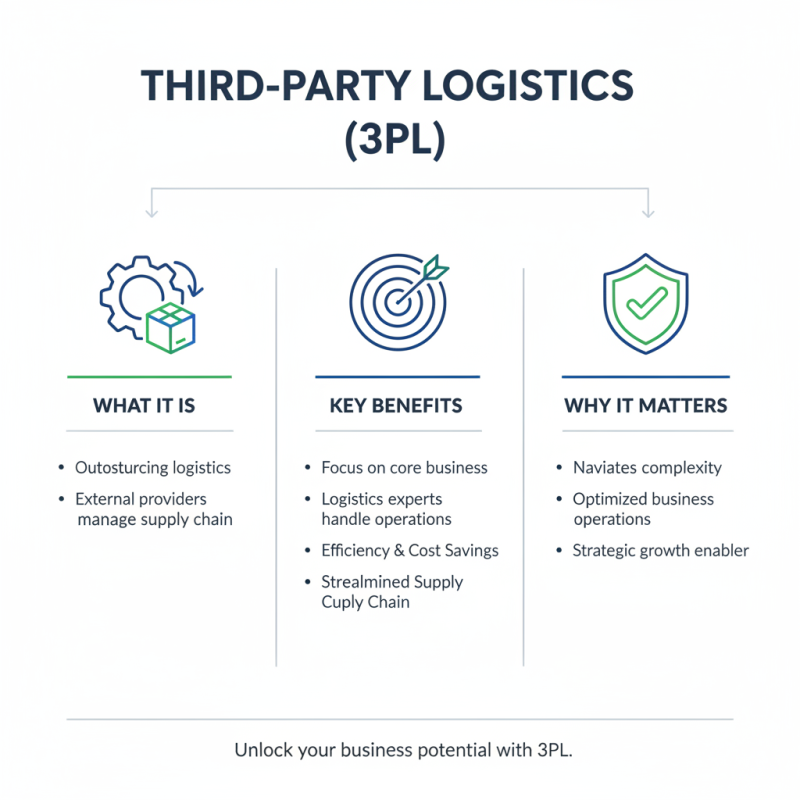
Third-party logistics (3PL) refers to outsourcing logistics and supply chain management functions to external providers. This strategy plays a vital role in business operations. It enables companies to focus on core functions while experts handle logistics. Many businesses find it hard to manage complex supply chains. 3PL providers streamline these processes, providing efficiency and savings.
Using a 3PL can optimize shipping times and costs. They have established networks and technologies to improve distribution. This can ultimately lead to better customer satisfaction. However, not all 3PLs are created equal. Some may not understand your specific needs. Choosing the wrong partner can lead to delays and miscommunication. Do your homework before signing any contracts.
Tips: Assess your logistics needs carefully. Look for a 3PL that aligns with your business goals. Communication is key. Regularly interact with your provider to discuss challenges and solutions. Evaluating performance metrics helps ensure you’re receiving value for your investment. Don’t hesitate to provide feedback; it can improve the service you receive.
Key Benefits of Utilizing 3rd Party Logistics for Companies
Third-party logistics (3PL) have become a vital part of modern business strategy. Companies often face challenges in managing supply chains effectively. This is where 3PL providers come in. According to industry reports, companies that leverage 3PL services see a 20-30% reduction in logistics costs. Such savings can significantly affect a firm's profitability.
Using 3PL also improves operational efficiency. These providers specialize in logistics, allowing businesses to focus on core activities. Data indicates that firms utilizing 3PL can enhance delivery speed by 15-20%. This speed can give businesses a competitive edge. However, relying on a third party can lead to issues. Misalignment of goals may occur. If communication falters, delays can happen.
Flexibility is another key benefit. Many 3PL providers offer scalable solutions. This scalability allows businesses to adjust operations based on demand. Reports show that 70% of companies using 3PL services can respond quickly to market changes. Still, flexibility comes with challenges. Seasonal spikes can overwhelm 3PL providers. A well-planned strategy is essential to avoid pitfalls in such scenarios.
Why is 3rd Party Logistics 3PL Crucial for Business Success? - Key Benefits of Utilizing 3rd Party Logistics for Companies
| Benefit |
Description |
Impact on Business |
| Cost Efficiency |
Reduces operational costs by leveraging the logistics provider's expertise and infrastructure. |
Improves profitability and allows reallocation of funds towards core business activities. |
| Focus on Core Competencies |
Enables companies to concentrate on their primary business functions instead of managing logistics. |
Enhances overall efficiency and innovation in the core areas of the business. |
| Scalability |
Allows businesses to easily adjust their logistics operations according to market demands. |
Facilitates growth and expands market reach without the need for substantial investment. |
| Expertise and Technology |
Access to advanced logistics technologies and expert knowledge without direct investment. |
Improves efficiency and reliability in the supply chain process. |
| Risk Management |
Mitigates risks related to shipping and warehousing through professional oversight. |
Minimizes disruptions and losses, ensuring smoother operations. |
How 3PL Enhances Supply Chain Efficiency and Flexibility
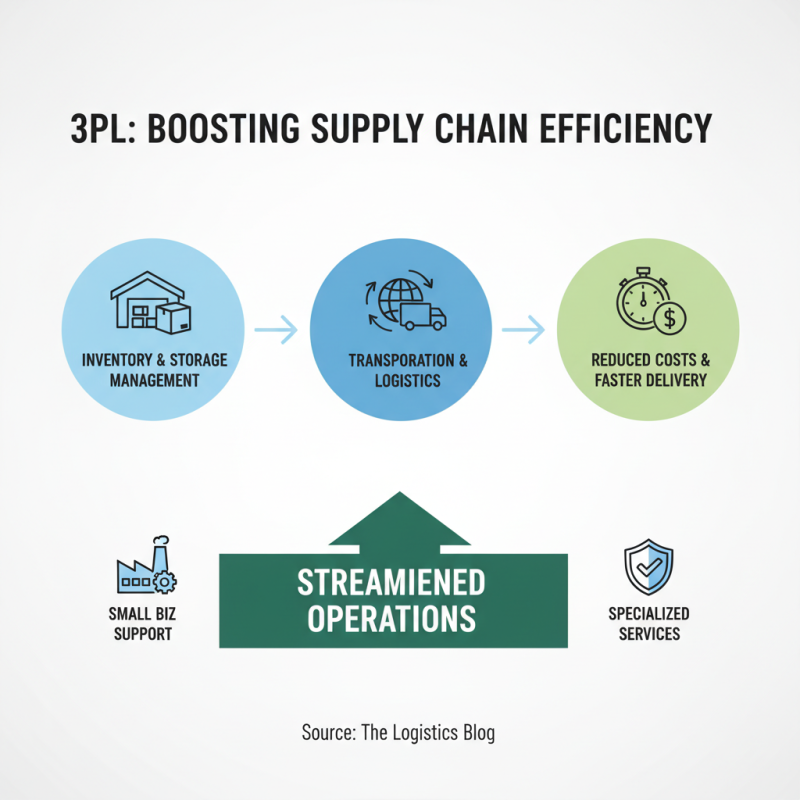
The role of third-party logistics (3PL) in enhancing supply chain efficiency is significant. 3PL providers offer specialized services that help businesses streamline operations. They manage inventory, handle storage, and oversee transportation logistics, which might overwhelm a small company. A successful 3PL partnership can reduce costs and improve delivery times.
Flexibility is another critical aspect of 3PL. Businesses can adjust their logistics strategies in response to market changes. For instance, if demand spikes unexpectedly, a 3PL can quickly scale up operations. This adaptability allows companies to respond swiftly to fluctuations, providing a competitive edge. Yet, reliance on a 3PL can create challenges. If a provider fails to deliver, it directly impacts the business's reputation.
Moreover, the integration of technology in 3PL services enhances visibility. Real-time tracking systems let businesses monitor shipments. This transparency aids in decision-making but can also expose vulnerabilities. It’s crucial for companies to assess if their 3PL partner is technologically advanced. A mismatch could lead to inefficiencies or data loss. Balancing reliance on 3PL with internal capabilities is essential for long-term success.
Challenges Businesses Face Without 3rd Party Logistics Integration
In today’s fast-paced market, businesses face numerous challenges without effective
3rd Party Logistics (3PL) integration. A report from Armstrong & Associates
indicates that companies without 3PL support often suffer from inventory inefficiencies and rising
distribution costs. This can lead to delayed deliveries, impacting customer satisfaction. A staggering
79% of companies report higher operational costs without leveraging third-party logistics.
Businesses that rely solely on in-house logistics may struggle with scalability. A lack of flexibility
in logistics can stifle growth. According to the Council of Supply Chain Management Professionals, around
75% of shippers are unable to meet demand spikes during peak seasons. Here, 3PL can provide crucial
support. The ability to scale logistics operations quickly is vital for staying competitive.
Tip: Consider conducting a logistics audit. Identify bottlenecks that could hinder growth.
Simplifying processes may reveal opportunities for 3PL services.
Many companies also find themselves battling
technology integration issues. Outdated systems can lead to poor data visibility.
In fact, 61% of firms cite technology as a barrier to effective logistics management.
Partnering with a 3PL can provide access to advanced technologies, enhancing real-time tracking and reporting capabilities.
Tip: Invest in technology training for your team. Building tech-savvy logistics staff can improve
overall efficiency. Embracing the latest tools can lead to better performance.
Future Trends in 3PL and Their Impact on Business Success
The logistics landscape is changing. Businesses must adapt to stay competitive. One major trend is the rise of automation in 3PL. Automated warehouses can reduce labor costs and improve efficiency. This technology can also minimize errors. However, implementation costs can be high. Companies must weigh these factors before proceeding.
Sustainability is another focus area. Clients are increasingly seeking environmentally friendly options. Implementing green logistics can attract more customers. Yet, many businesses struggle to find the right balance. Going green can sometimes lead to higher costs. It's vital for companies to assess their resources.
Tips: Explore partnerships with tech firms. This can lower costs and enhance service. Stay updated on industry trends. Investing in staff training can improve operations. Additionally, feedback from clients is crucial. Adjusting strategies based on this input can lead to better outcomes.
Impact of 3PL on Business Success (2023)
This chart illustrates the impact of Third-Party Logistics (3PL) on various aspects of business success in 2023. Cost Reduction remains the most significant factor, followed by Operational Efficiency and Customer Satisfaction, highlighting the critical role of 3PL in enhancing overall business performance.