How to Choose the Best 3PL Third Party Logistics Provider?
Choosing the best 3PL (Third Party Logistics) provider is crucial for businesses in today's fast-paced market. As David Hayes, an industry expert with over two decades of experience, states, “A great 3PL partner offers more than just logistics; they understand your business strategy.” In an era where companies need agility and efficiency, the right logistics partner can make a significant difference.
Many businesses overlook the importance of trust when selecting a 3PL provider. Trust is built on reliability and industry knowledge. A provider should demonstrate their expertise through proven success stories and testimonials. It's essential to evaluate their capabilities and experience in your specific sector. If they lack familiarity with your industry, they may not deliver the desired outcomes.
The selection process often involves weighing various factors. Cost, service level, and geographical reach are key considerations. However, companies should also reflect on intangible aspects such as cultural fit and communication. The best logistics partners align with your business goals and can adapt to changes swiftly. Finding the right 3PL partner demands careful evaluation and introspection.

Understanding the Role of Third Party Logistics (3PL) Providers
Choosing a third-party logistics (3PL) provider can be daunting. Understanding their role is crucial. These companies handle various logistics activities like warehousing, transportation, and inventory management. They serve as a bridge between manufacturers and customers, which can streamline processes and reduce operational costs.
A reputable 3PL provider offers expertise in logistics. They understand market trends and technology. This insight can improve your supply chain. However, not every provider is ideal for every business. Some may lack experience in specific sectors. Their approach can vary from one client to another. This requires careful evaluation and reflection on your unique needs.
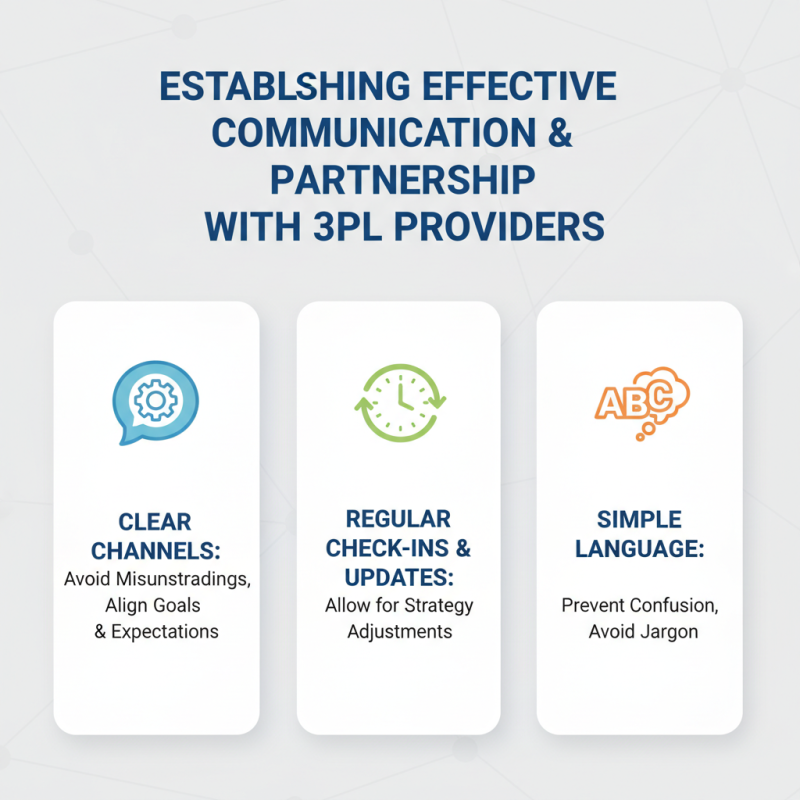
Communication is essential when working with a 3PL. Clear expectations can enhance collaboration. However, misunderstandings may arise. It’s important to discuss challenges openly. A partner with a strong track record can often provide personalized solutions. Still, you should consider their flexibility and adaptability to changing circumstances. This is a dynamic field, and not all providers can keep pace.
Identifying Your Business Needs and Logistics Requirements
Choosing the right third-party logistics (3PL) provider begins with understanding your unique business needs. Analyzing your logistics requirements is essential. Think about your volume and the types of goods you handle. This will guide you toward a provider that specializes in your industry.
Consider your shipping destinations. Are your customers local or global? A 3PL with a strong network in your target regions can be more efficient. Flexibility in service options is also crucial. Look for providers who can adapt to your changing needs.
Tip: Create a list of your logistical challenges. This will help you communicate effectively with potential providers.
Evaluating technology is another critical aspect. Does the provider have a user-friendly platform? Integration is vital for real-time tracking and inventory management.
Tip: Schedule demonstrations to assess how their systems meet your requirements.
Finding a reliable 3PL is not just about price. It's about the balance of service quality and cost-effectiveness. Not all providers will meet your expectations, so take the time to evaluate each option critically.
How to Choose the Best 3PL Third Party Logistics Provider?
| Criteria |
Business Needs |
Logistics Requirements |
Importance Level (1-5) |
| Shipping Volume |
High |
Full Truckload (FTL) & Less Than Truckload (LTL) |
5 |
| Geographical Coverage |
National |
Warehousing in multiple regions |
4 |
| Technology Integration |
E-commerce compatible |
Real-time tracking & inventory management |
5 |
| Special Handling Requirements |
Fragile items |
Temperature-controlled shipping |
3 |
| Customer Support and Communication |
24/7 availability |
Dedicated account management |
5 |
| Cost Structure |
Budget-sensitive |
Transparent pricing |
4 |
| Scalability |
Growth potential |
Flexibility in logistics services |
5 |
Evaluating Potential 3PL Providers: Key Factors to Consider
Choosing the right third-party logistics (3PL) provider can significantly impact your supply chain efficiency. Evaluating potential partners involves looking at several key factors. Start by assessing their service offerings. A reputable 3PL should provide a range of services, from warehousing to transportation solutions tailored to your industry needs. Data from the 2022 Logistics Trends report highlights that companies using specialized 3PLs see a 15% decrease in logistics costs.
Technology integration is another crucial aspect. A competent 3PL should utilize advanced systems for inventory management and visibility. According to recent studies, 72% of logistics providers now use technology like AI and data analytics to enhance their operations. However, not all providers are at the same level of technical sophistication, so take your time to review their tech capabilities.
Cultural fit between your business and the 3PL is also essential. Misalignments can lead to communication issues and operational headaches. In fact, a study by the Council of Supply Chain Management Professionals found that 30% of logistics partnerships fail due to poor communication and unaligned goals. Reflect on how compatible the 3PL's values and practices are with your own. Through a thorough evaluation process, you can mitigate potential risks and build a reliable logistics network.
Analyzing Cost Structures and Service Levels of 3PL Options
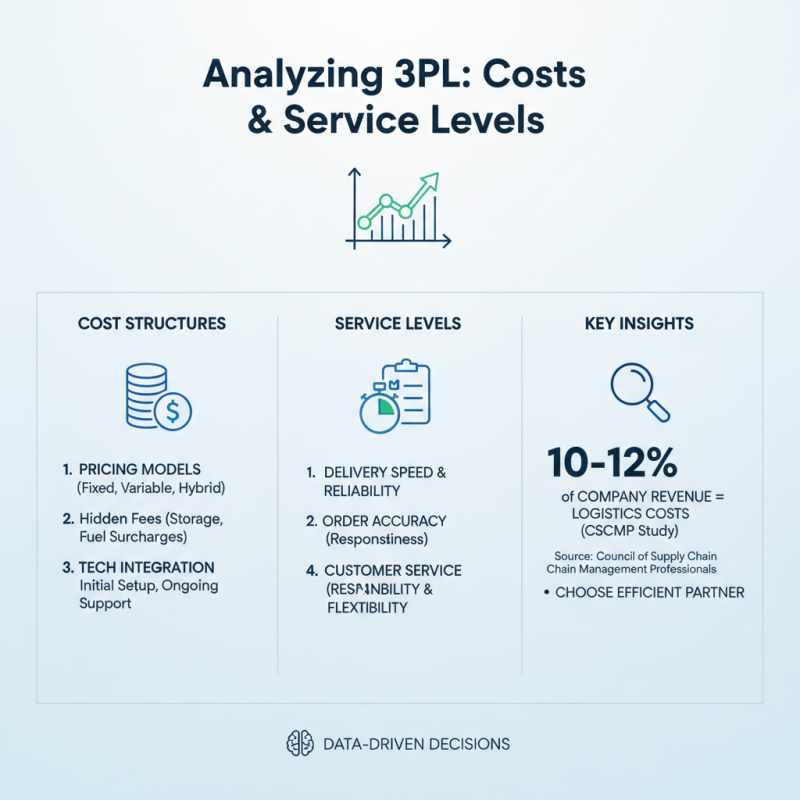
When analyzing cost structures and service levels of third-party logistics (3PL) providers, it’s essential to consider the nuances of pricing models. A recent study from the Council of Supply Chain Management Professionals reveals that logistics costs can account for approximately 10-12% of a company's revenue. Understanding these costs ensures you select the most efficient partner.
Different 3PL providers offer various pricing structures, including fixed, variable, and tiered pricing. Fixed costs can provide budget certainty, while variable costs may align better with demand fluctuations. A logistics benchmarking report highlights that 75% of firms that evaluate 3PL costs experience significant savings. However, pricing alone shouldn’t dictate choice; service levels must also align with your business needs. Quality of service and reliability can often be overlooked. Research shows that 30% of companies have faced delays that resulted in lost revenue due to inadequate service.
Moreover, consider hidden costs that may arise. These could be in the form of excessive fees for expedited shipping or penalties for operational discrepancies. Inadequate service levels can damage customer relationships, which might have lasting effects on a brand's reputation. Therefore, compare potential partners carefully. Collect data on their service reliability, responsiveness, and past performance in similar sectors. This broad overview will guide you in making an informed choice about the right 3PL provider.